Discover how Alexander the Great’s daring strategies and relentless ambition transformed him from a young prince into a legendary conqueror whose influence still echoes today. His mastery of innovative warfare, combined with charismatic leadership and cultural diplomacy, redefined the ancient world’s geopolitical landscape. But what truly set him apart was his ability to inspire loyalty across diverse civilizations, seamlessly blending military genius with visionary ideals. As you delve into his early education under Aristotle, his tactical agility, and his legacy of cultural exchange, you’ll question whether his extraordinary success was driven solely by conquest or by a deeper understanding of human psychology and unity. His story is not just one of battles and borders but one of enduring influence—challenging us to consider how bold vision, adaptability, and authentic leadership can forge a legacy that transcends time.
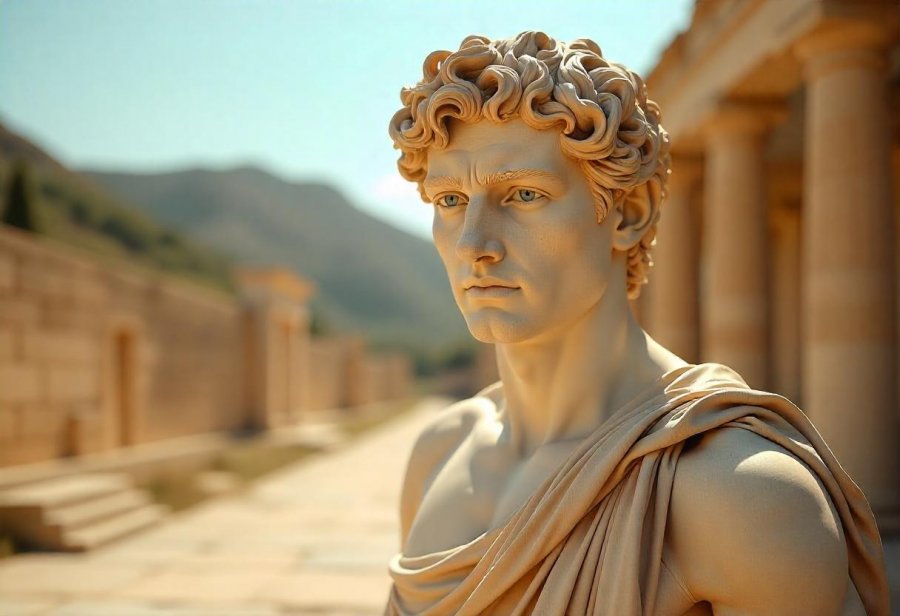
Alexander the Great: A Fusion of Genius and Visionary Leadership
Alexander the Great stands as one of history’s most captivating and multifaceted figures, embodying a rare fusion of military genius and visionary leadership. His achievements go far beyond territorial expansion; they redefined the geopolitical and cultural contours of the ancient world. To truly grasp his lasting influence, we must consider the unique circumstances that elevated him to prominence and how his innovative strategies set new standards for empire-building. His life and conquests serve as a testament to daring tactics, relentless ambition, and a leadership style that combined charisma with careful calculated risk-taking.
Born in 356 BCE in Pella, the Macedonian capital, Alexander grew up in a society that prized martial skill and strategic thinking from an early age. His father, King Philip II, was a shrewd military reformer whose innovations transformed Macedonia into a dominant power in Greece. Surrounded by the politics of conquest and reform, Alexander absorbed a culture that celebrated heroism, discipline, and innovation—traits that would later define his approach to warfare and leadership. His early exposure to military strategy and political maneuvering laid the foundation for ambitions that would eventually reshape the known world.
His education under Aristotle was more than an academic pursuit; it was a deliberate effort to cultivate a broad, strategic intellect. Aristotle’s teachings emphasized critical reasoning, scientific inquiry, and moral philosophy—elements that expanded Alexander’s worldview and sharpened his capacity for complex decision-making. This combination of aristocratic privilege and rigorous intellectual training created a leader capable not only of tactical brilliance but also of understanding the long-term implications of empire-building. It was this deep well of knowledge and curiosity that fueled his daring innovations in warfare and diplomacy.
The influence of his father’s military reforms cannot be overstated. Philip II’s innovations, especially the development of the Macedonian phalanx, established a formidable fighting force that Alexander would later refine and adapt. Witnessing these reforms firsthand, Alexander learned about discipline, logistics, and the integration of various military arms. These early lessons in warfare underscored the importance of adaptability and innovation—traits that would become hallmarks of his campaigns. Growing up immersed in these strategic principles gave him a distinct advantage when navigating the complexities of conquest across diverse terrains and cultures, equipping him with the tools to turn bold visions into reality.
From his earliest years, Alexander demonstrated a natural leadership instinct and an insatiable curiosity about warfare. Known for challenging his instructors and peers, he exhibited an innate aptitude for command and a desire to emulate his father’s successes. His early experiments with battlefield tactics, horsemanship, and strategic maneuvers revealed an inventive mind eager to push beyond traditional Greek warfare. These formative experiences of trial and error laid the groundwork for the revolutionary military strategies that would later define his campaigns. His childhood curiosity and drive to learn were not casual hobbies—they were the seeds of a strategic genius destined to leave an indelible mark on history.
Foundations of Greatness: How Early Life and Education Shaped Alexander’s Conquests
Alexander’s early years laid a crucial foundation for the leader he would eventually become. Born in 356 BCE in Pella, the Macedonian capital, he was immersed from a young age in a society that prized martial prowess and strategic innovation. His father, King Philip II, was not only a formidable military reformer but also a shrewd statesman whose reforms transformed Macedonia into a dominant force in Greece. Growing up amidst the politics of conquest and territorial expansion, Alexander absorbed a culture that celebrated heroism, discipline, and ingenuity—traits that would later define his approach to warfare and leadership. These early influences shaped his ambitions and provided the strategic tools necessary for his future conquests.
Education played a pivotal role in shaping Alexander’s worldview. Under the tutelage of Aristotle, his studies extended far beyond traditional Greek philosophy. Aristotle emphasized critical reasoning, scientific inquiry, and moral philosophy—elements that broadened Alexander’s intellectual horizon and sharpened his capacity for complex decision-making. This rigorous training complemented his aristocratic upbringing, allowing him to see beyond immediate military goals toward long-term cultural and political integration. The combination of practical military lessons and philosophical insight created a leader capable of envisioning an empire that bridged diverse civilizations, setting him apart from many of his contemporaries.
The influence of Philip’s military innovations cannot be overstated. The Macedonian phalanx, with its tightly packed ranks and long sarissas, established a revolutionary fighting formation that provided Macedonian armies with unprecedented discipline and cohesion. Alexander watched these reforms in action, learning firsthand about the importance of discipline, logistics, and the integration of different arms of the military. These lessons in adaptability and innovation would become hallmarks of his campaigns. His familiarity with the Macedonian military system gave him a distinct advantage when faced with diverse enemies and terrains, enabling him to adapt and refine tactics in real-time.
From an early age, Alexander demonstrated a natural aptitude for leadership and a relentless curiosity about warfare. Known for challenging his instructors and peers, he exhibited a rare drive to master every aspect of combat, from horsemanship to battlefield tactics. His early experiments with strategic maneuvers and combat simulations revealed an inventive mind eager to push beyond traditional Greek warfare conventions. These formative experiences—marked by trial, error, and quick learning—laid the groundwork for the revolutionary tactics he would develop later. His childhood curiosity and desire to emulate his father’s successes fueled a relentless pursuit of excellence that would shape his military genius.
Personal experiences also played a significant role in shaping his leadership style. Alexander’s early challenges and successes fostered confidence and resilience. He learned the importance of inspiring loyalty through personal example, often risking his life alongside his soldiers. This willingness to share hardships created a bond of trust that proved critical during long campaigns across unfamiliar territories. His exposure to the realities of command—balancing strategy, morale, and logistics—instilled a deep understanding of the multifaceted nature of leadership. These lessons in resilience, adaptability, and personal connection would become central to his approach as he expanded his empire.
Ultimately, Alexander’s formative years were more than mere background—they were carefully cultivated to prepare him for the complexities of empire-building. His exposure to his father’s reforms, his philosophical education under Aristotle, and his own relentless drive to learn and lead converged into a mindset rooted in innovation, daring, and cultural awareness. This foundation enabled him to think several steps ahead, to navigate the unpredictable realities of conquest, and to inspire unwavering loyalty among his followers. In combining practical tactics with intellectual depth and personal resolve, Alexander was uniquely equipped to turn bold visions into reality, shaping not just a kingdom, but the course of history itself.

Leading with Vision: The Charisma and Courage That Inspired His Army
Alexander’s leadership was defined by a rare blend of visionary insight and personal charisma that could ignite the spirits of his troops and propel them toward extraordinary feats. Unlike many conquerors who relied solely on brute strength or tactical acumen, he understood that morale and personal connection were equally vital. His unwavering confidence often led him to make bold, sometimes seemingly reckless decisions—crossing treacherous mountain passes, launching daring assaults—decisions that others might have hesitated to attempt. Yet, what truly distinguished him was his ability to articulate a compelling vision of a unified empire, inspiring loyalty and unwavering resolve among a diverse army drawn from Macedonians, Greeks, Egyptians, Persians, and Indians. His charisma transformed lofty ideals into tangible purpose, making the impossible seem within reach through conviction and collective effort.
What made Alexander’s leadership exceptional was not just his strategic daring but his talent for inspiring trust through authenticity. He led from the front, often risking his own life alongside his soldiers, which forged a profound bond of loyalty and admiration. This willingness to share hardships reinforced the psychological unity of his troops, even amid unfamiliar terrain and formidable enemies. When crises arose, his presence on the battlefield served as a rallying point—his confidence and resolve spreading through his ranks like wildfire. Soldiers believed in his vision because they saw in him a leader who embodied bravery, decisiveness, and relentless ambition. His personal example of resilience and daring became a powerful tool for motivation, elevating his army’s morale beyond the bounds of ordinary discipline.
Flexibility was another cornerstone of Alexander’s leadership style. He possessed an acute sense of the battlefield’s fluid nature—knowing when to press an advantage, when to retreat, and how to exploit opportunities that others might overlook. This tactical agility was rooted in his broader strategic vision of creating a vast, interconnected empire—one that required not only conquest but also the integration of diverse cultures and political systems. His ability to adapt tactics swiftly, employing unconventional formations like the oblique phalanx or complex cavalry maneuvers, confounded enemies and kept his forces steps ahead of opponents. Such innovation was driven by a conviction that victory depended on swift, decisive action combined with a profound understanding of the environment and enemy psychology.
At the core of his leadership was a relentless drive to push beyond known boundaries, fueled by a sense of destiny and a desire to forge a lasting legacy. Alexander saw himself as a unifier of worlds, destined to connect Greek, Egyptian, Persian, and Indian civilizations into a single, cosmopolitan empire. This grand ambition extended beyond territorial conquest; it reflected his belief in the transformative power of cultural synthesis. His willingness to venture into uncharted territory—geographical, political, and ideological—demonstrated his conviction that true greatness required daring and risk-taking. While some may argue that this overreach eventually strained his empire, it also exemplified his commitment to a vision that aimed to leave a lasting mark on history.
His leadership was complemented by a keen understanding of his followers’ motivations and aspirations. He recognized that inspiring loyalty went beyond military discipline; it required genuine connection and shared purpose. By personally risking his safety and demonstrating unwavering confidence, Alexander fostered a sense of solidarity that transcended mere obedience. His capacity to communicate a grand vision in vivid, compelling terms transformed his army into a motivated community united by common goals. This authentic connection, combined with his strategic ingenuity, allowed him to turn fleeting victories into the foundation of an empire that would endure long after his death.
Alexander’s personal qualities—his daring, resilience, and ability to inspire—created a leadership aura that continues to resonate today. He possessed an uncanny ability to read the battlefield—not just physically, but psychologically. His intuition for when to strike, when to hold back, and how to manipulate enemy perceptions was masterful. This psychological insight enabled him to exploit the fears and hopes of his opponents, turning the battlefield into a stage for psychological warfare. His charisma and personal example fostered a sense of shared destiny among his followers, transforming raw troops into a cohesive force capable of overcoming seemingly insurmountable odds.
His capacity to adapt tactics swiftly and his willingness to take calculated risks defined his military genius. Unlike traditional commanders who relied on static formations, Alexander viewed war as a dynamic, fluid contest. His innovations—such as the oblique phalanx or the integration of cavalry and infantry—demonstrated that victory often hinged on outthinking the enemy. His mastery of maneuver warfare, combined with his psychological manipulation, kept his forces unpredictable and elusive. These principles of flexibility and innovation continue to influence military strategists, emphasizing that success depends as much on understanding the human element as on material strength.
In the end, Alexander’s leadership was rooted in a bold vision, authentic personal connection, and an unyielding desire to push beyond the limits of known conquest. His ability to inspire loyalty through genuine example, his strategic agility, and his daring risk-taking created a legacy that transcends mere military success. He showed that leadership is as much about fostering shared purpose as it is about tactical mastery. This seamless fusion of vision, charisma, and adaptability forged a leader whose influence endures—an enduring model for those who seek to lead not just armies, but civilizations.
Legacy Unveiled: How Alexander’s Empire Transformed Culture and Warfare
The influence of Alexander the Great extends far beyond the immediate territorial gains and military victories that defined his reign; his strategic innovations continue to shape modern military thinking and cultural development in profound ways. His mastery of combined arms tactics—integrating infantry, cavalry, and psychological warfare—has become a foundational element in contemporary military doctrine, illustrating how agility, deception, and swift adaptation can outmaneuver larger or more entrenched enemies. Modern strategists regularly analyze his campaigns to extract lessons about exploiting terrain, leveraging surprise, and maintaining logistical flexibility—principles that remain relevant amid today’s complex operational environments. Alexander’s emphasis on rapid, decisive action paired with a nuanced understanding of human psychology embodies timeless ideas about maneuver warfare, transcending the ancient world to inform contemporary military thought.
Culturally, his campaigns ignited a vast exchange of ideas, religions, and technologies that forever altered the civilizational landscape of the regions he touched. The cities he founded, most famously Alexandria in Egypt, evolved into vibrant centers of learning and cultural fusion. These hubs became melting pots where Greek art, science, and philosophy mingled with Egyptian, Persian, and Indian traditions, fostering an environment of innovation and intellectual cross-pollination. This process of cultural syncretism was no incidental byproduct of conquest; it was a deliberate strategy to sustain and legitimize his empire through mutual enrichment. The resulting Hellenistic civilization, shaped by this blend of diverse influences, laid a foundation for scientific, artistic, and political progress that persisted long after his death, influencing subsequent generations.
Leadership, as exemplified by Alexander, was rooted in charisma and the ability to inspire loyalty across a diverse spectrum of peoples and cultures. His talent for articulating a grand vision of unity—connecting Greek, Egyptian, Persian, and Indian worlds—transformed armies into motivated communities committed to a shared destiny. His personal example of bravery and resilience created bonds of trust that transcended mere discipline, elevating his followers’ morale even in unfamiliar and perilous settings. This authentic connection, coupled with his strategic flexibility, enabled him to adapt tactics swiftly and exploit opportunities others might overlook. Such innovation and personal magnetism made him not just a conqueror but a leader capable of fostering cultural synthesis and social cohesion.
The innovations Alexander introduced into warfare—particularly his mastery of rapid deployment and psychological manipulation—continue to influence military strategies today. His focus on mobility, surprise, and exploiting enemy weaknesses set a standard for maneuver warfare that remains relevant. His campaigns demonstrated that victory depends more on understanding human nature and environmental factors than on brute force alone. These principles are embedded in modern tactics, from special operations to strategic deception, emphasizing that success hinges on agility, innovation, and psychological insight. His ability to think several steps ahead, combined with a fearless willingness to take calculated risks, transformed the battlefield into a stage for innovation that still resonates in contemporary military practice.
Culturally, Alexander’s conquests fostered a wave of intercultural exchange that spurred scientific, artistic, and philosophical advancements. The Greek language, governance models, and scientific ideas spread across Persia, Egypt, and India, where they fused with local traditions to create new intellectual and artistic expressions. Cities like Alexandria became symbols of this blending—centers where diverse traditions coalesced into vibrant, innovative hubs. These interactions did not merely disperse Greek culture; they created a dynamic environment where ideas from different civilizations combined, producing a legacy of progress that persisted for centuries. The fusion of cultures under his empire exemplifies how conquest, when paired with strategic cultural diplomacy, can generate civilizational growth and resilience.
His approach to empire-building underscores that influence often resides in fostering long-term networks of knowledge, culture, and political ideas rather than sheer territorial dominance. By promoting intercultural dialogue and mutual understanding, Alexander laid the groundwork for an enduring legacy that outlasted his physical empire. His leadership demonstrated that sustainable influence depends on inspiring shared purpose and facilitating the exchange of ideas—principles that underpin modern diplomacy and international relations. The empire he envisioned was as much about creating interconnected worlds as it was about conquest; this vision continues to inspire contemporary efforts to build bridges across diverse societies.
The enduring impact of Alexander’s legacy reminds us that strategic ingenuity, cultural openness, and authentic leadership are essential ingredients for shaping history. His example shows that daring vision combined with adaptability can produce ripples of influence that resonate through centuries. Military strategists, leaders, and thinkers today often revisit his campaigns to understand how agility, innovation, and psychological mastery can turn the tide of conflicts. Likewise, his emphasis on cultural synthesis offers a blueprint for fostering mutual understanding in an increasingly interconnected world. Alexander’s life exemplifies how boldness and flexibility can forge pathways for lasting change, inspiring generations to pursue transformative influence beyond mere conquest.
In reflecting on his story, it becomes clear that Alexander’s true legacy lies in his capacity to inspire change—on the battlefield and within civilizations. His mastery of strategic innovation, cultural diplomacy, and authentic leadership created a legacy that transcends time. By daring to challenge conventions, he demonstrated that influence arises not just from military might but from the ability to connect people through shared purpose and transformative ideas. His example continues to serve as a powerful reminder that the most enduring legacies are built on bold vision, adaptable strategies, and a genuine commitment to fostering unity amid diversity. In studying his life, we find not only lessons from history but a timeless blueprint for shaping the future.
Enduring Influence: How Alexander’s Strategies Continue to Shape the Modern World
The legacy of Alexander the Great endures precisely because his strategies and ambitions continue to shape the modern world in subtle yet profound ways. His emphasis on rapid mobility, psychological manipulation, and cultural integration revolutionized military thinking, establishing principles that remain central to contemporary doctrine. Today’s armies analyze his campaigns not just as historical milestones but as sources of timeless lessons in adaptability, surprise, and understanding human psychology. The core ideas of agility and innovation—hallmarks of his approach—are embedded in strategies used to navigate complex operational environments, from counterinsurgency operations to high-tech maneuver warfare.
Beyond the battlefield, Alexander’s influence extends deeply into the realm of cultural exchange and civilizational development. His conquests sparked a vast and enduring flow of ideas, religions, and technologies that transformed the regions he touched. The cities he founded, most notably Alexandria in Egypt, became vibrant hubs of learning and innovation, where Greek art, science, and philosophy fused with Egyptian, Persian, and Indian traditions. This deliberate process of cultural syncretism was designed to foster unity and stability within his empire, creating a shared heritage that persisted long after his death. The resulting Hellenistic civilization laid intellectual and artistic foundations that continued to inspire progress and discovery for centuries.
Leadership, as exemplified by Alexander, reveals that influence depends as much on inspiring loyalty and shared purpose as on tactical brilliance. His charisma and personal example of bravery turned armies into motivated communities, capable of confronting the most daunting challenges. By risking his own safety and demonstrating unwavering confidence, he forged bonds of trust that elevated his followers’ morale beyond mere discipline. This authentic connection—grounded in shared ideals—made his vision compelling and his campaigns more than mere military operations; they became movements driven by collective belief in a common destiny.
The innovations Alexander pioneered in warfare—such as mastery of rapid deployment, the integration of different arms, and psychological warfare—still underpin modern military strategy. His focus on swift, decisive action, combined with an acute understanding of terrain and enemy psychology, exemplifies the timeless principles of maneuver warfare. His campaigns demonstrated that victory often hinges on the ability to outthink and outmaneuver opponents, exploiting their fears and weaknesses while maintaining logistical flexibility. These lessons continue to influence military thought, reminding us that success depends just as much on understanding human nature as on material strength.
Culturally, Alexander’s conquests established a blueprint for intercultural exchange that fueled scientific, artistic, and philosophical advancements for generations. The Greek language, governance models, and scientific ideas spread across Persia, Egypt, and India, where they merged with local traditions to produce new forms of knowledge and artistic expression. Cities like Alexandria became symbols of this vibrant fusion, embodying the idea that conquest, when paired with strategic cultural diplomacy, can lead to civilizational progress. This fusion created a resilient, innovative environment that sustained long after the empire’s political structure dissolved, illustrating that influence rooted in shared knowledge and mutual respect can endure through centuries.
His legacy reminds us that true influence is built on daring vision, strategic flexibility, and the capacity to inspire across diverse cultures. Alexander’s life underscores that leadership is as much about fostering unity and exchanging ideas as it is about territorial gain. In an increasingly interconnected world, his example offers a powerful lesson: lasting impact arises from the courage to challenge conventions and the wisdom to build bridges that transcend differences. His story continues to inspire leaders and strategists today, demonstrating that boldness combined with adaptability creates ripples that shape history long after the conquests are over. In studying his life, we find a blueprint for creating meaningful, enduring change—one rooted in innovation, cultural openness, and authentic leadership.